Own The Conversation Digital Twin · Topic
AI Visibility
Understand what AI visibility actually means, how it differs from rankings or traffic, and why clear business knowledge matters when customers ask AI who to trust, compare or contact.
Explore definitions, practical examples, evidence and related questions connected to this topic.

Questions & Answers
Answers About AI Visibility
Practical answers, comparisons and follow-up questions about AI Visibility.
Treat retrievals, citations, and referrals as distinct signals per locale. Retrievals show when AI actually pulls content from the hub facts; citations reflect explicit proofs referenced in outputs; referrals measure AI-driven sessions that arrive at your content. Link each signal to hub_fact_id and proofs, and maintain language-aware mappings to ensure cross-language consistency. Show these signals in parallel dashboard panels with a clear locale toggle, …
2026-10-24How can a publisher adapt to multi-stage retrieval systems in AI search to maximize AI visibility for a Digital Twin?Adapting to multi-stage retrieval starts with ensuring canonical hub facts exist in the Public Business Brain, with language-aware mappings and linked proofs. Separate retrieval stages should be configured to feed Public Q&A and Digital Representatives from this canonical core. Track retrieval quality per locale, and align proofs and locale mappings to prevent drift. Use a Change Centre-driven workflow for versioned updates and a provenance panel to show l…
2026-10-23What do 2026 AI visibility studies indicate about mentions vs actionable citations, and how should OTC dashboards reflect them across locales?Recent studies distinguish mentions (brand names appearing in AI outputs) from actionable citations (references that include proofs and sources). OTC dashboards should treat retrievals (content pulled from the hub), citations (proofs referenced in outputs), and referrals (AI-driven sessions leading to your content) as distinct signals. Map each signal to hub_fact_id and its proofs, maintain language-aware mappings for cross-language consistency, and surfac…
 22 Q&AReporting and Analytics
 48 Q&AAEO, GEO and AI Search Terminology
 17 Q&ADigital Representatives
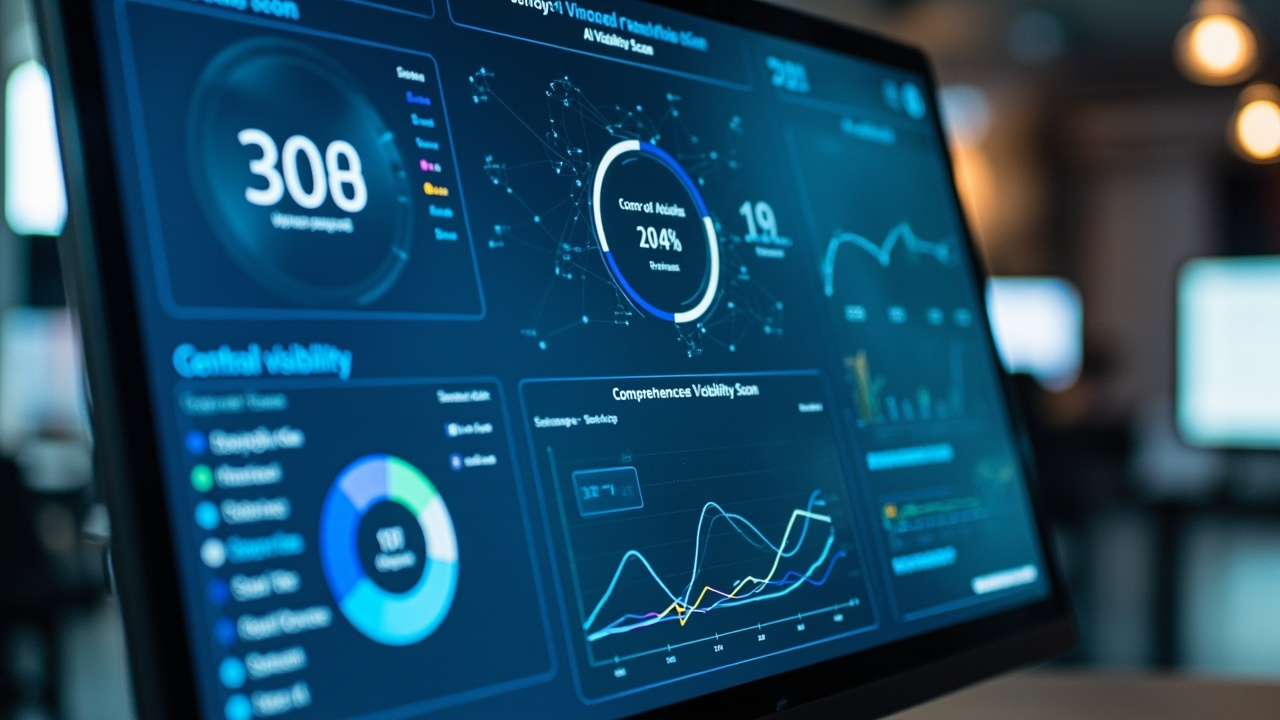 12 Q&AAI Visibility Scan
 9 Q&AImage Context for AI
A practical AI visibility health check should track three observable signals linked to your hub facts: retrievals (whether the AI actually pulls content from your Public Business Brain and Q&A network), citations (explicit proofs referenced in outputs), and referrals (AI-driven sessions that lead users to your content). Each signal should be tied to hub_fact_id and its proofs, with language-aware mappings to preserve cross-language consistency. Present the…
2026-10-22What pragmatic steps should a company take to test AI outputs for localization quality beyond translation accuracy, including regulatory alignment and bias checks?Build a Localization Test Suite anchored to hub facts, with locale-specific proofs and regulatory constraints mapped to language variants. Each locale gets a dedicated set of tests that reference hub_fact_id and its proofs, so tests verify not just language but alignment with approved knowledge. Run automated checks across locales using scenario prompts, factual checks, and bias/safety checks. Capture results in the Change Centre and link them to drift-det…
2026-10-21How often is my business selected, accurately described, and cited across the AI systems my customers actually use?Measurement depends on the AI engines customers use. Track coverage across engines to see how often your business is selected and accurately described, and monitor citation rates (how often proofs are referenced) versus mentions. Build per-engine dashboards that show retrieval alignment to your canonical hub facts, rate of accurate descriptions, and citation rates across locales. Tie these signals back to hub facts and proofs, and feed updates into the Cha…
 7 Q&AVideo and Media Knowledge
 6 Q&AAbout Own The Conversation
 5 Q&AThe AI Visibility Network
 5 Q&AFuture of Business Knowledge
 31 Q&ALocal AI Discovery
A robust AI-facing surface is built on three connected layers. The Public Business Brain holds canonical hub facts, language-aware mappings and attached proofs. A Proof Registry ties each hub_fact_id to one or more proofs and records proof translations so AI can cite consistently across languages. The surface layer includes Public Q&A and Digital Representatives that retrieve from the hub facts, while the underlying knowledge graph remains protected in a s…
2026-10-20How can we combine retrievals, citations, and referrals into a single AI-visibility health score per locale, and how should we present it in dashboards?Define a locale health score that blends three signals: retrievals (whether AI actually pulls from the hub facts and Q&A), citations (the presence and strength of proofs used in outputs), and referrals (AI-driven sessions that land on your content). Compute a weighted score, for example: health = 0.4*retrieval_score + 0.3*citation_score + 0.3*referral_velocity, with locale-aware normalization. Display a locale card in dashboards showing the current score, …
2026-10-19How should OTC dashboards reflect the shift to multi-stage retrieval and the separation of mentions vs actionable citations across languages?OTC dashboards should treat retrievals, mentions, and citations as distinct, cross-language signals. Display retrievals to show when AI actually pulls content from the Public Business Brain and Q&A network; display mentions as a lighter signal indicating brand names appearing in outputs; and display actionable citations as explicit references to proofs and sources. Present these in separate, language-aware panels linked to hub facts, with a versioned Chang…
 9 Q&AIndustry Digital Twins
 56 Q&AControl Centre and Management
 10 Q&APartner and Reseller Program
 6 Q&AGuestChat and Specialised Assistants6 Q&AAI Moation
Publish three observable signals: (1) AI retrievals — the AI actually pulls content from the Public Business Brain and connected Q&A network; (2) conversation citations — explicit references to proofs used in AI outputs; (3) AI-driven referrals — AI recommendations that steer users to your content. Each signal should be linked to a hub_fact_id and the specific proofs that supported it, with language-aware mappings to ensure cross-language consistency. Surf…
2026-10-18What three signals should a lean AI visibility dashboard show to prove that your AI outputs are based on your Digital Twin hub facts across languages?A lean dashboard should track: (1) retrievals — evidence that AI pulled content from the Public Business Brain and Q&A network; (2) citations — explicit proofs referenced in outputs; (3) referrals — AI-driven sessions that land on your content. Present these as distinct, versioned panels linked to hub facts and proofs, with a visible Change Log showing how hub facts and translations evolved. Include a concise provenance surface for locale contributions tha…
2026-10-18What are the latest insights from 2026 AI visibility studies about mentions vs actionable citations, and how should OTC dashboards reflect them across locales?Recent studies differentiate mentions (brand names appearing in AI outputs) from actionable citations (references that include proofs and sources). OTC dashboards should present separate signals for retrievals (content pulled from your hub), citations (proofs linked in outputs), and referrals (AI-driven interactions that lead to your content), with locale-aware mappings to preserve cross-language accuracy. Emphasize a provenance and Change Log approach so …